
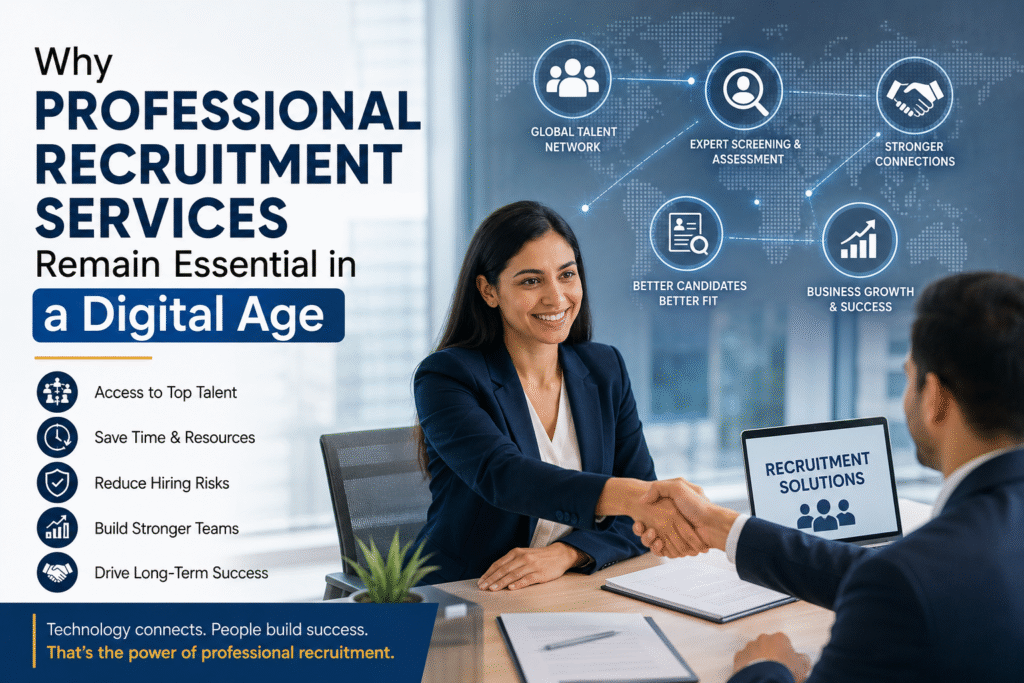
In today’s fast-paced digital world, technology has transformed nearly every aspect of business operations. From online job portals and AI-powered hiring tools to social media recruitment and virtual interviews, employers now have more hiring resources than ever before. At first glance, it may seem that professional recruitment services are no longer necessary. However, despite these technological advancements, recruitment consultancies continue to play a vital role in helping organizations find, attract, and retain top talent.
In fact, as the hiring landscape becomes increasingly complex, the expertise offered by professional recruiters has become even more valuable. While technology can streamline certain processes, it cannot replace the human insight, industry knowledge, and relationship-building skills that recruitment professionals bring to the table.
The Growing Complexity of Hiring
To begin with, modern recruitment involves much more than simply posting a job advertisement and waiting for applications. Employers must identify suitable candidates, evaluate qualifications, verify experience, assess cultural fit, and ensure compliance with employment regulations.
Furthermore, the rise of remote work and global talent pools has expanded hiring opportunities while also creating new challenges. Companies often receive hundreds of applications for a single position, making it difficult to identify the most qualified candidates efficiently.
Professional recruitment services help businesses navigate this complexity. By leveraging their expertise and networks, recruiters can quickly identify high-quality candidates and reduce the burden on internal hiring teams.
Access to a Larger Talent Pool
One of the biggest advantages of working with recruitment professionals is access to a broader talent network. While online job boards can attract active job seekers, many highly qualified candidates are not actively searching for new opportunities.
Moreover, passive candidates often represent some of the most skilled and experienced professionals in the market. Reaching these individuals requires industry connections, personalized communication, and strategic outreach.
Recruitment consultancies maintain extensive databases and professional networks that allow them to connect employers with talent that may not be visible through traditional hiring channels. As a result, businesses gain access to a wider and more diverse pool of candidates.
Saving Time and Resources
Hiring can be an extremely time-consuming process. Reviewing resumes, conducting interviews, verifying references, and negotiating offers all require significant effort and attention.
Additionally, lengthy hiring processes can lead to productivity losses, especially when critical positions remain vacant for extended periods. Businesses may struggle to meet deadlines, serve customers effectively, or achieve growth objectives.
Professional recruitment services help streamline the hiring process from start to finish. Recruiters handle candidate sourcing, screening, and preliminary assessments, allowing employers to focus on their core business activities.
Consequently, organizations can fill vacancies faster while minimizing disruptions to daily operations.
Expertise Beyond Technology
Although artificial intelligence and automated recruitment platforms have improved efficiency, they still have limitations. Technology can analyze resumes and match keywords, but it cannot fully evaluate qualities such as communication skills, leadership potential, adaptability, or cultural compatibility.
In contrast, experienced recruiters bring a human perspective that technology cannot replicate. They understand industry trends, hiring challenges, and employer expectations.
Furthermore, recruitment consultants can identify subtle strengths and weaknesses during candidate interactions. This deeper level of evaluation helps employers make informed hiring decisions and avoid costly mistakes.
Therefore, professional recruitment services remain an essential complement to digital hiring tools rather than a replacement for them.
Reducing Hiring Risks
Every hiring decision involves a degree of risk. Hiring the wrong candidate can result in lost productivity, decreased team morale, increased turnover, and significant financial costs.
According to industry studies, replacing an employee can cost a company several times the employee’s annual salary when recruitment, onboarding, and training expenses are considered.
Fortunately, recruitment professionals help minimize these risks through comprehensive screening processes. They conduct interviews, verify credentials, assess skills, and check references before presenting candidates to employers.
As a result, organizations are more likely to hire individuals who possess both the technical qualifications and personal attributes required for long-term success.
Supporting Specialized and Hard-to-Fill Roles
Certain positions require highly specialized skills, certifications, or industry experience. Finding suitable candidates for these roles can be particularly challenging through standard recruitment methods.
For example, industries such as healthcare, engineering, information technology, construction, and finance often face talent shortages. In these sectors, competition for qualified professionals is intense.
Professional recruiters understand these niche markets and maintain relationships with specialized talent pools. Consequently, they can identify and engage candidates more effectively than many employers can on their own.
This expertise is especially valuable when businesses need to fill critical roles quickly and efficiently.
Enhancing the Candidate Experience
The recruitment process shapes how candidates perceive an organization. A poor hiring experience can damage an employer’s reputation and discourage talented professionals from pursuing future opportunities.
On the other hand, a positive candidate experience helps strengthen employer branding and attract top talent.
Recruitment consultancies act as professional representatives of their clients throughout the hiring journey. They maintain clear communication, provide timely updates, and guide candidates through each stage of the process.
As a result, candidates feel respected and informed, creating a more positive overall experience for everyone involved.
Adapting to Changing Workforce Trends
The modern workforce continues to evolve rapidly. Employee expectations, workplace preferences, and career goals are changing alongside technological advancements.
For instance, many professionals now prioritize flexibility, work-life balance, career development opportunities, and company culture when evaluating job offers.
Recruitment consultants stay informed about these trends and help employers adjust their hiring strategies accordingly. Moreover, they provide valuable market insights regarding salary expectations, workforce demographics, and competitive hiring practices.
Therefore, businesses that partner with recruitment professionals are often better positioned to attract and retain top talent in a competitive market.
Building Long-Term Hiring Success
Recruitment is not simply about filling vacancies. Instead, it is about building strong teams that contribute to organizational growth and success over time.
Professional recruitment services take a strategic approach to talent acquisition. They work closely with employers to understand business objectives, workforce needs, and company culture.
Furthermore, many recruitment consultancies provide ongoing support, workforce planning assistance, and talent management guidance. This long-term partnership helps organizations develop sustainable hiring strategies and maintain a competitive advantage.
As businesses continue to evolve, having access to trusted recruitment expertise becomes increasingly important.
Conclusion
While digital tools have undoubtedly transformed the recruitment industry, they have not eliminated the need for professional recruitment services. Instead, technology and human expertise now work together to create more effective hiring processes.
Professional recruiters provide access to wider talent networks, reduce hiring risks, improve candidate experiences, and offer strategic guidance that technology alone cannot deliver. Additionally, their industry knowledge and personalized approach help organizations navigate an increasingly competitive labor market.
Ultimately, in a digital age where talent remains one of the most valuable business assets, professional recruitment services continue to be an essential partner for companies seeking long-term success. By combining technological efficiency with human insight, recruitment consultancies help employers make smarter hiring decisions and build stronger, more resilient workforces.