In today’s competitive business environment, finding the right talent is only half the battle. The real challenge lies in creating lasting relationships between employers and employees that lead to sustained growth, productivity, and satisfaction. While many organizations focus solely on recruitment, successful businesses understand that long-term employer-employee success requires ongoing support, strategic planning, and effective workforce management. This is where consultancies play a vital role.
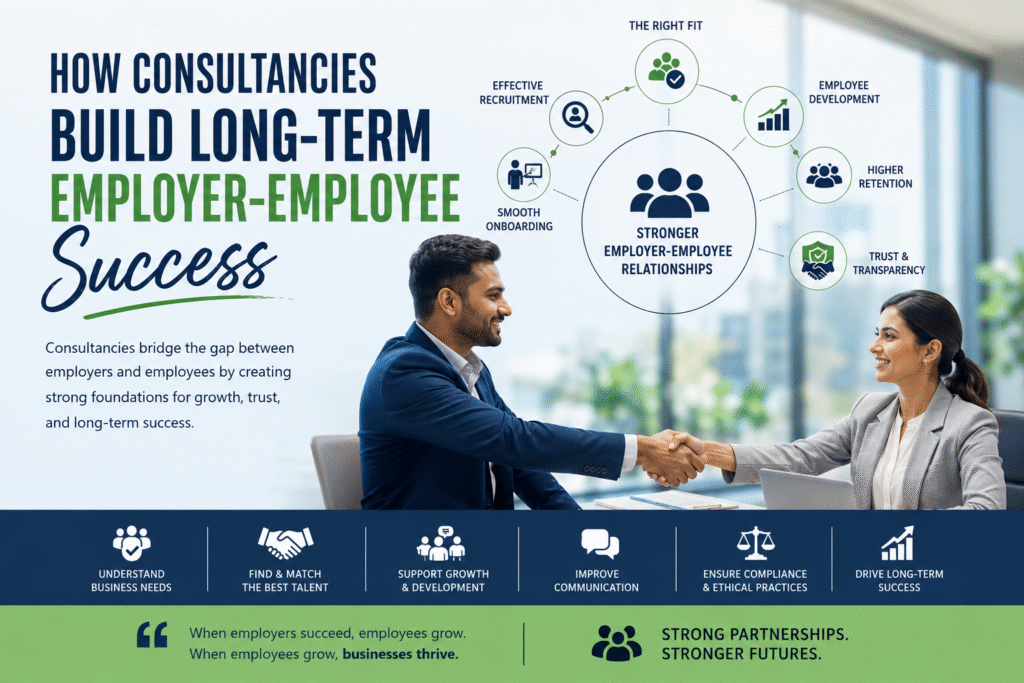
Consultancies act as strategic partners that help organizations attract, retain, and develop talent while ensuring employees have the resources and opportunities they need to thrive. As a result, both employers and employees benefit from stronger relationships and improved outcomes.
Understanding the Role of Consultancies
Consultancies do much more than fill vacant positions. In fact, they serve as bridges between employers seeking skilled professionals and candidates searching for meaningful career opportunities. By understanding the needs of both parties, consultancies create matches that are beneficial in the long run.
Moreover, consultancies provide guidance throughout the employment lifecycle. From recruitment and onboarding to performance management and employee retention, they help organizations establish systems that encourage long-term success.
Consequently, businesses can focus on their core operations while trusting workforce experts to manage talent-related challenges.
Finding the Right Fit from the Start
One of the most important ways consultancies contribute to long-term success is by ensuring the right fit between employers and employees. While technical skills are important, cultural compatibility is equally crucial.
Therefore, experienced consultants take time to understand a company’s values, work environment, and business goals. Similarly, they assess candidates’ career aspirations, personalities, and professional strengths.
As a result, employers receive candidates who are more likely to adapt successfully to the workplace. At the same time, employees find positions that align with their goals and expectations.
Because of this careful matching process, organizations experience lower turnover rates and higher employee satisfaction.
Streamlining the Recruitment Process
The recruitment process can be time-consuming and expensive. However, consultancies simplify this process by leveraging their expertise, networks, and resources.
For example, they conduct candidate sourcing, screening, interviews, and background checks. Furthermore, they verify qualifications and assess skills to ensure only suitable candidates move forward.
As a result, employers save valuable time and reduce hiring risks. Meanwhile, candidates benefit from a smoother and more transparent hiring experience.
Additionally, faster recruitment processes help organizations fill critical positions without unnecessary delays, contributing to business continuity and growth.
Supporting Effective Onboarding
Recruitment is only the beginning of the employee journey. Even highly qualified employees can struggle if they do not receive proper onboarding support.
Therefore, many consultancies assist organizations in developing effective onboarding programs. These programs help new employees understand company policies, workplace culture, and job responsibilities.
Furthermore, consultancies often provide guidance on communication strategies, training schedules, and performance expectations.
Consequently, new hires become productive more quickly and feel more confident in their roles. At the same time, employers benefit from reduced adjustment periods and improved employee engagement.
Enhancing Employee Retention
Employee retention is a major concern for organizations across industries. High turnover not only increases recruitment costs but also affects productivity and team morale.
Fortunately, consultancies help businesses identify and address the factors contributing to employee dissatisfaction. For instance, they may conduct employee surveys, analyze workplace trends, and recommend improvements in management practices.
Moreover, consultancies assist organizations in creating competitive compensation packages, professional development opportunities, and recognition programs.
As a result, employees feel valued and motivated to remain with the organization. Consequently, businesses enjoy greater workforce stability and reduced hiring expenses.
Promoting Professional Development
Employees are more likely to stay with organizations that invest in their growth. Therefore, consultancies often play a key role in workforce development initiatives.
For example, they may recommend training programs, leadership development courses, and skill enhancement workshops. Additionally, they help organizations identify future leaders and create succession plans.
By supporting continuous learning, consultancies help employees expand their capabilities and advance their careers.
Meanwhile, employers benefit from a more skilled and adaptable workforce capable of meeting evolving business demands.
Thus, professional development becomes a win-win strategy for both parties.
Improving Workplace Communication
Strong communication is essential for long-term employer-employee success. Unfortunately, communication gaps often lead to misunderstandings, conflicts, and decreased productivity.
To address this challenge, consultancies help organizations establish effective communication channels and feedback systems. For instance, they may recommend regular performance reviews, employee engagement programs, and conflict resolution procedures.
Furthermore, consultancies encourage open dialogue between management and staff.
As a result, employees feel heard and respected. Likewise, employers gain valuable insights into workforce concerns and expectations.
Consequently, workplace relationships become stronger and more collaborative.
Ensuring Compliance and Ethical Practices
Compliance with labor laws and ethical employment standards is critical for maintaining trust and credibility. However, navigating employment regulations can be complex, especially for organizations involved in international hiring.
Therefore, consultancies provide expert guidance on legal requirements, documentation, contracts, and workplace policies.
Moreover, they help employers implement fair hiring practices and maintain ethical standards throughout the employment process.
As a result, businesses minimize legal risks while creating a safe and transparent work environment. Simultaneously, employees gain confidence in the organization’s commitment to fairness and professionalism.
Adapting to Changing Workforce Needs
The modern workforce is constantly evolving. New technologies, market trends, and employee expectations require organizations to remain flexible and responsive.
Fortunately, consultancies monitor industry developments and provide strategic recommendations to help businesses adapt.
For example, they may suggest hybrid work models, digital recruitment strategies, or workforce planning initiatives.
Additionally, consultancies help organizations prepare for future talent demands by identifying emerging skill requirements.
Consequently, employers remain competitive while employees benefit from modern workplace practices that support their success.
Building Trust and Long-Term Relationships
Ultimately, long-term employer-employee success is built on trust. Employees want to work for organizations that value their contributions, while employers seek team members who are committed and dependable.
Consultancies help establish this foundation by promoting transparency, fairness, and mutual understanding.
Furthermore, they encourage organizations to invest in employee well-being, career development, and workplace culture.
As trust grows, employees become more engaged and loyal. Similarly, employers gain a dedicated workforce that contributes to business success.
Therefore, consultancies play an essential role in creating relationships that endure over time.
Conclusion
In an increasingly competitive business landscape, long-term employer-employee success requires more than simply filling job vacancies. It demands strategic workforce planning, effective communication, professional development, employee engagement, and ongoing support.
Consultancies provide the expertise and resources necessary to achieve these goals. From recruiting the right candidates and improving onboarding processes to enhancing retention and ensuring compliance, they help create environments where both employers and employees can thrive.
As a result, organizations enjoy improved productivity, stronger workplace relationships, and sustainable growth. Meanwhile, employees benefit from meaningful career opportunities, professional development, and a positive work experience.
Ultimately, by serving as trusted partners, consultancies help build the foundation for lasting employer-employee success.