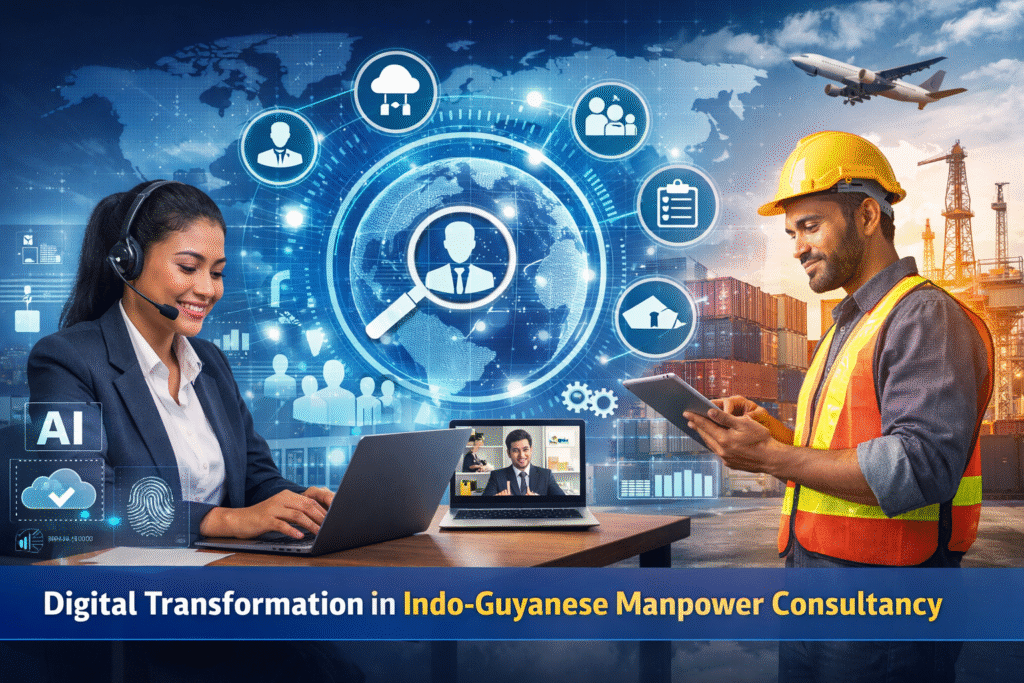
In today’s fast-paced, technology-driven world, digital transformation is no longer optional—it is essential. This is especially true for manpower consultancies that connect Indo-Guyanese talent with opportunities across the globe. As industries evolve and hiring becomes increasingly competitive, consultancies must embrace digital tools to remain efficient, transparent, and globally relevant. Therefore, digital transformation is reshaping how Indo-Guyanese manpower consultancies operate, recruit, and deliver value.
The Shift Toward Digital Recruitment
Traditionally, recruitment processes were manual, time-consuming, and often limited by geography. However, with the rise of digital platforms, Indo-Guyanese manpower consultancies are now able to reach a broader talent pool and connect with international employers more effectively. For instance, online job portals, social media platforms, and recruitment software have significantly streamlined candidate sourcing.
Moreover, digital databases allow consultancies to store and access candidate information instantly. As a result, recruiters can match candidates with suitable job roles much faster than before. In addition, automation tools help in screening resumes, scheduling interviews, and even conducting initial assessments. Consequently, the entire hiring process becomes more efficient and less prone to human error.
Enhancing Global Connectivity
Another major benefit of digital transformation is improved global connectivity. Indo-Guyanese manpower consultancies often deal with employers from various countries, including the United States, Canada, and the Middle East. Therefore, maintaining seamless communication is crucial.
With tools such as video conferencing, cloud-based platforms, and instant messaging apps, consultancies can now communicate with clients and candidates in real time. Furthermore, virtual interviews have eliminated the need for physical presence, saving both time and costs. As a result, candidates from Guyana can easily access global job opportunities without leaving their homes during the initial stages.
Data-Driven Decision Making
In addition to improving efficiency, digital transformation enables data-driven decision-making. Recruitment consultancies can now analyze vast amounts of data to identify trends, predict hiring needs, and improve their strategies.
For example, analytics tools can provide insights into which industries are hiring the most Indo-Guyanese workers or which skills are in high demand. Consequently, consultancies can guide candidates toward relevant training programs and career paths. Similarly, data can help identify the most effective recruitment channels, allowing agencies to optimize their marketing efforts.
Improving Candidate Experience
In the modern job market, candidate experience plays a vital role in recruitment success. Therefore, Indo-Guyanese manpower consultancies are leveraging digital tools to enhance the overall experience for job seekers.
Online application systems, mobile-friendly platforms, and automated updates ensure that candidates stay informed throughout the recruitment process. Additionally, AI-powered chatbots can answer queries instantly, providing support 24/7. As a result, candidates feel more engaged and valued.
Furthermore, digital platforms make it easier for candidates to upload documents, track application status, and receive feedback. This transparency not only builds trust but also strengthens the reputation of the consultancy.
Streamlining Compliance and Documentation
One of the most challenging aspects of international recruitment is managing documentation and compliance. However, digital transformation has simplified these processes significantly.
Cloud-based systems allow consultancies to securely store and manage important documents such as passports, visas, and contracts. Moreover, digital verification tools ensure the authenticity of candidate credentials. As a result, the risk of fraud is reduced, and compliance with international regulations becomes easier.
In addition, automated workflows help in tracking deadlines and ensuring that all necessary documentation is completed on time. Consequently, the chances of delays or errors are minimized.
Expanding Training and Skill Development
Digital transformation is not limited to recruitment alone; it also extends to training and skill development. Indo-Guyanese manpower consultancies are increasingly offering online training programs to prepare candidates for global job markets.
For instance, e-learning platforms provide courses in technical skills, language proficiency, and workplace etiquette. Furthermore, virtual workshops and webinars enable candidates to gain valuable insights from industry experts. As a result, candidates become more competitive and better equipped for international roles.
Additionally, digital tools allow consultancies to track the progress of candidates and recommend personalized training programs. This, in turn, ensures that candidates meet the specific requirements of employers.
Strengthening Employer Relationships
While digital tools benefit candidates, they also play a crucial role in strengthening relationships with employers. Indo-Guyanese manpower consultancies can use customer relationship management (CRM) systems to manage client interactions more effectively.
For example, CRMs help track employer requirements, monitor recruitment progress, and maintain communication history. Consequently, consultancies can provide a more personalized and responsive service.
Moreover, digital platforms enable consultancies to showcase candidate profiles, conduct virtual job fairs, and share real-time updates with employers. As a result, employers gain confidence in the consultancy’s capabilities and are more likely to establish long-term partnerships.
Challenges of Digital Transformation
Despite its numerous advantages, digital transformation also presents certain challenges. For instance, the initial investment in technology can be significant, especially for smaller consultancies. Additionally, there may be a learning curve for staff who are not familiar with digital tools.
Furthermore, data security is a major concern. As consultancies handle sensitive information, they must implement robust cybersecurity measures to protect data from breaches. However, with proper planning and investment, these challenges can be effectively managed.
The Road Ahead
Looking ahead, digital transformation will continue to shape the future of Indo-Guyanese manpower consultancy. Emerging technologies such as artificial intelligence, blockchain, and machine learning are expected to further revolutionize the recruitment process.
For example, AI can enhance candidate matching accuracy, while blockchain can ensure secure and transparent credential verification. Therefore, consultancies that adopt these technologies early will have a competitive advantage.
At the same time, the human element will remain essential. While technology can streamline processes, the expertise and judgment of recruiters are irreplaceable. Thus, the key to success lies in balancing digital innovation with human touch.
Conclusion
In conclusion, digital transformation is redefining Indo-Guyanese manpower consultancy in profound ways. From improving recruitment efficiency to enhancing candidate experience and strengthening global connectivity, technology is driving significant progress. Moreover, data-driven insights and digital tools are enabling consultancies to deliver better outcomes for both candidates and employers.
However, embracing digital transformation requires careful planning, investment, and continuous learning. Nevertheless, the benefits far outweigh the challenges. As the global job market becomes increasingly competitive, Indo-Guyanese manpower consultancies must adapt to stay relevant.
Ultimately, those who embrace digital innovation will not only survive but thrive in this evolving landscape.